Voices of Resilience and Hope: Concert at Augsburg University
Voices of Resilience and Hope: Concert at Augsburg University
Date
Tue, Jun 23
Time
6:30 pm – 9:00 pm
Location
Augsburg University
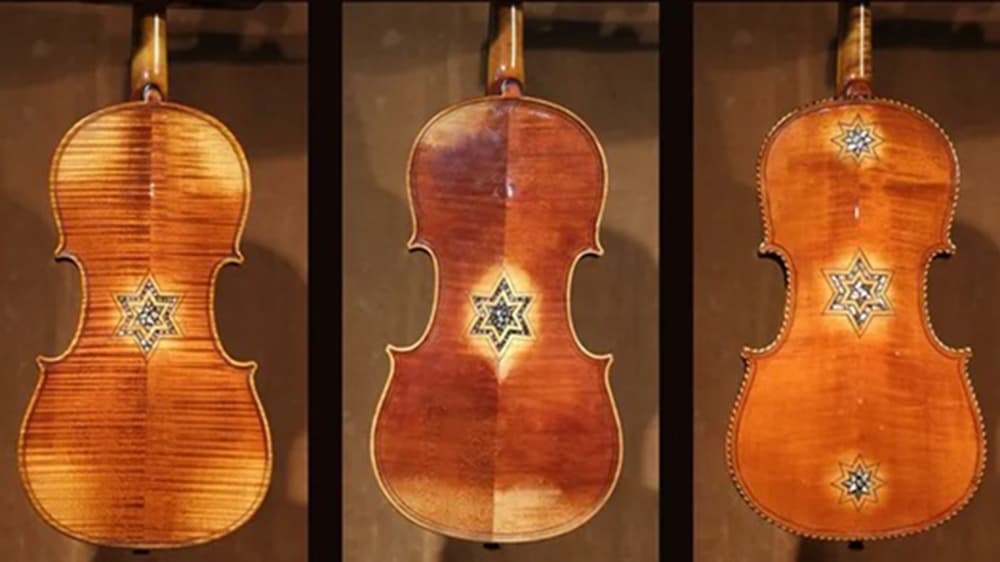
Presented by the Minnesota JCC in collaboration with the Minnesota Sinfonia, the community is invited to experience Violins of Hope, a collection of restored string instruments once played by Jewish musicians—many of whom later perished in the Holocaust. Thanks to the generosity of Diane and Paul Jacobson, Augsburg University’s Music Department in the Schwartz School of the Arts will host a symposium, chamber concert, community dinner, and orchestra concert highlighting Jewish-themed music in remembrance of the millions of Jews murdered during the Holocaust. Presenters include Augsburg University faculty, University of Minnesota faculty, and the Minnesota Sinfonia.
All events are free and open to the public. All are welcome.
SYMPOSIUM SCHEDULE | 2–4 p.m.
The Polyphony of Life: Dietrich Bonhoeffer and an Ethic of Hope
Lori Brandt-Hale (Augsburg University)
Dietrich Bonhoeffer (1906–1945) was a German theologian, ethicist, ecumenist, peace activist, and anti-Nazi dissident who was executed by the regime for his resistance. He wrote profoundly about faith, community, and responsibility. He was also an accomplished musician. Bonhoeffer’s theological insights were sometimes framed by his musical sensibilities, giving contemporary readers access to his work as well as his ongoing witness and legacy of hope.
Music after Kristallnacht: Mourning and Resilience
Karen Painter (University of MN)
The devastation to Jewish property and deportation of Jewish men on November 9-10, 1938 (“Kristallnacht”) silenced the remaining Jewish periodicals and the activities of the Jewish Cultural League. Eventually, under close Nazi supervision, a singular periodical was established (Judisches Nachrichtenblatt, in print into 1943) and musical performances resumed at the Jewish Cultural League (active until September 1941). Onerous restrictions faced by both venues led music to assume a symbolic role uplifting Jewish Germans, encouraging emigration, and—only very indirectly—offering the space to mourn. Attention to Jewish folk song, including its preservation by emigrants, proved to readers that a cultural legacy would extend beyond the persecution and death that seemed imminent. A series of “Popular concerts” signaled to Nazi authorities evenings of benign entertainment yet the programming offered an emotional intensity more suitable to constituents.
Lost Voices: Songs by Four Composers who were interred at Terezin Concentration Camp
Rick Penning (Carleton College)
This talk will focus on the rich musical culture that thrived in spite of horrific conditions in the Nazi ghetto at Terezin, Czechoslovakia. A special focus will be on four composers and their vocal music: Viktor Ullmann, Hans Krasa, Pavel Haas, and Gideon Klein.
CHAMBER CONCERT PROGRAM | 4–5 p.m.
Wiegala | Ilse Weber (1903–1944)
Sydney Elliott, violin; Jill Dawe, piano
Sonata for Flute and Piano | Erwin Schulhoff (1894–1942)
Rachel Bergman, flute; Jill Dawe, piano
Fantasia on a Provençal Christmas Carol |William Hilsley (1911–2003)
Merilee Klemp, oboe; Elise Meichels Parker, violin; Heidi Amondson, violin; Anne Ainomae, viola; Jane Cords-O’Hara, cello
String Trio | Gideon Klein (1919–1945)
Elise Meichels Parker, violin; Anne Ainomae, viola; Jane Cords-O’Hara, cello